Tag Archives: “pesticides”

Water contamination news: USA – EPA Adds three sites to the Superfund List – orders continued treatment of contaminated groundwater at former manufacturing facility in Richmond – Va.

Save the water news education and water research postings

Save the Water™
Daily
News Brief

Courtesy of
EPA
Save the Water™
Water Education
Water Research
Department
and is shared as
educational material.
AQUASQUAD LOGO DILOS PROGRAM A day in the life of a scientist DILOS program: youth education principles. Sponsor a program today DILOS FUNDRAISINGMicroscope images K-4 STEMContaminated drinking WaterPlease make your check payable to Save the Water, Inc. mail to: Singer and Falk Certified Public Accountants 777 Old Country Rd. Plainview, N.Y. 11803


Rating for savethewater.org

Water contamination news: USA

Water contamination news USA – EPA Adds three sites to the Superfund List – orders continued treatment of contaminated groundwater at former manufacturing Facility in Richmond Va

EPA Adds the Riverside Industrial Park in Newark, New Jersey to the Superfund List seven acre site along the Passaic River contaminated with PCBs and volatile organic compounds.

World water day every day Did You Know water fact 3

Best viewed using Mozilla Firefox, Google Chrome, and Safari.
Save the Water™ / Water Research / Water Education / Global Water News ©2013

Elias Rodriguez, (212) 637-3664, rodriguez.elias@epa.gov

(New York, N.Y. – May 21, 2013) The U.S. Environmental Protection Agency has added the Riverside Industrial Park in Newark, New Jersey to the Superfund National Priorities List of the country’s most hazardous waste sites. After a 2009 spill of oily material from the industrial park into the Passaic River, the EPA discovered that chemicals, including benzene, mercury, chromium and arsenic, were improperly stored at the site. The agency took emergency actions to prevent further release of these chemicals into the river. Further investigation showed that soil, ground water and tanks at the Riverside Industrial Park are contaminated with volatile organic compounds and polychlorinated biphenyls (PCBs).

Benzene, mercury, chromium and arsenic are all highly toxic and can cause serious damage to people’s health and the environment. Many volatile organic compounds are known to cause cancer in animals and can cause cancer in people. Polychlorinated biphenyls are chemicals that persist in the environment and can affect the immune, reproductive, nervous and endocrine systems and are potentially cancer-causing.

EPA proposed the site to the Superfund list in September 2012 and encouraged the public to comment during a 60-day public comment period. After considering public comments and receiving the support of the New Jersey Department of Environmental Protection for listing the site, the EPA is putting it on the Superfund list.

“The EPA has kept people out of immediate danger from this contaminated industrial park and can now develop long-term plans to protect the community,” said Judith A. Enck, EPA Regional Administrator. “By adding the site to the Superfund list, the EPA can do the extensive investigation needed to determine the best ways to clean up the contamination and protect public health.”

Since the early 1900s, the Riverside Industrial Park, at 29 Riverside Avenue in Newark, has been used by many businesses, including a paint manufacturer, a packaging company and a chemical warehouse. The site covers approximately seven acres and contains a variety of industrial buildings, some of which are vacant. In 2009, at the request of the New Jersey Department of Environmental Protection, the EPA responded to an oil spill on the Passaic River that was eventually traced to the Riverside Avenue site. The state and the city of Newark requested the EPA’s help in assessing the contamination at the site and performing emergency actions to identify and stop the source of the spill.

The EPA plugged discharge pipes from several buildings and two tanks that were identified as the source of the contamination. In its initial assessment of the site, the EPA also found ten abandoned 12,000 to 15,000 gallon underground storage tanks containing hazardous waste, approximately one hundred 3,000 to 10,000 gallon aboveground storage tanks, two tanks containing oily waste, as well as dozens of 55-gallon drums and smaller containers. These containers held a variety of hazardous industrial waste and solvents. Two underground tanks and most of the other containers were removed by the EPA in 2012.

The EPA periodically proposes sites to the Superfund list and, after responding to public comments, designates them as final Superfund sites. The Superfund final designation makes them eligible for funds to conduct long-term cleanups. The Superfund program operates on the principle that polluters should pay for the cleanups, rather than passing the costs to taxpayers. After sites are placed on the Superfund list of the most contaminated waste sites, the EPA searches for parties responsible for the contamination and holds them accountable for the costs of investigations and cleanups. The search for the parties responsible for the contamination at the Riverside Industrial Park site is ongoing.

EPA proposes to add Makah Reservation Warmhouse Beach dump to federal Superfund cleanup list.

Suzanne Skadowski, EPA Public Affairs, 206-553-6689, skadowski.suzanne@epa.gov

(May 21, 2013 – Seattle) The U.S. Environmental Protection Agency is proposing to add the Warmhouse Beach dump, on the Makah Reservation, in Neah Bay, Washington, to the Superfund National Priorities List. The proposed cleanup listing includes a public comment period from May 23 through July 23, 2013.

“Adding the Warmhouse Beach dump to EPA’s Superfund cleanup list will help protect the Makah Tribe’s treaty resources and the environment along the Strait of Juan de Fuca,” said Rick Albright, Director of EPA’s Region 10 Office of Environmental Cleanup in Seattle. “The Makah Tribe welcomes EPA’s efforts to assist in the Tribe’s longstanding effort to clean up the Warmhouse Beach dump, our highest environmental priority,” said Timothy J. Greene, Chairman of the Makah Tribal Council. “We look forward to working collaboratively with EPA to finally addressing the serious environmental and health risks that the dump poses to our treaty resources and culturally significant areas.”

The Warmhouse Beach dump was a 7-acre municipal and hazardous waste dump used in the 1970s-1980s by the Makah Air Force Station and by tribal and non-tribal members until the dump was closed in 2012. Contaminants found at the Warmhouse Beach dump and in nearby creeks include polyaromatic hydrocarbons or PAHs, polybrominated diphenyl ethers or PBDEs, perchlorate, metals, pesticides, polychlorinated biphenyls or PCBs, and dioxins. Mussels at the beaches also contain elevated concentrations of lead. The Makah Tribe referred the Warmhouse Beach dump to EPA for Superfund cleanup based on concerns about harmful substances leaching from the dump to surface waters and the tribe’s traditionally significant shellfishing beaches.

Warmhouse Beach is an important natural and cultural resource for the Makah and they have used it as a traditional summer fishing camp and for subsistence harvest of sea urchins, mussels, and steamer clams. Warmhouse Beach is also used for camping, surfing, and other recreational activities. EPA’s Superfund program investigates and cleans up complex and uncontrolled or abandoned hazardous waste sites to protect people’s health and the environment, with the ultimate goal of returning them to communities for productive use. Information on the Warmhouse Beach dump: http://yosemite.epa.gov/R10/cleanup.nsf/sites/warmhouse

EPA Adds the Matlack, Inc. Site in Woolwich Township, New Jersey to the Superfund List.

(New York, N.Y. – May 21, 2013) The U.S. Environmental Protection Agency has added the Matlack, Inc. site in Woolwich Township, New Jersey to the Superfund National Priorities List of the country’s most hazardous waste sites. The site is a former truck terminal at which operations included truck maintenance and truck, trailer and tanker washing. As a result of past industrial activities, the soil and ground water are contaminated with volatile organic compounds and polychlorinated biphenyls (PCBs). Many volatile organic compounds are known to cause cancer in animals and can cause cancer in people. PCBs are chemicals that persist in the environment and can affect the immune, reproductive, nervous and endocrine systems and are potentially cancer-causing. Contamination from this site is impacting the Grand Sprute Run stream and nearby wetlands that have been identified among New Jersey’s most significant natural areas.

EPA proposed to add the site to the Superfund list in September 2012 and encouraged the public to comment during a 60-day public comment period. After considering public comments and receiving the support of the New Jersey Department of Environmental Protection to list the site, the EPA is putting it on the Superfund list.

“Placing the Matlack site on the Superfund list is an important step in protecting people’s health and allowing EPA to take action to clean up the site,” said Judith A. Enck, EPA Regional Administrator. “By adding the site to the Superfund list, the EPA can do the extensive investigation needed to determine the best ways to address the contamination and protect public health.”

Located on Route 322 in Woolwich, New Jersey the site operated as a truck terminal from 1962 to 2001. Previous activities at the 70-acre facility included the cleanup of trucks and tankers used for transporting a variety of materials including flammable and corrosive liquids. The polluted cleaning solution was disposed of in an unlined lagoon behind the terminal building from 1962 until 1976 when Matlack Inc. began transporting the wastewater away from the site for disposal.

Soil is contaminated with volatile organic compounds and PCBs.

The lagoon was subsequently filled with a variety of demolition debris and other material. Matlack discontinued the tanker cleaning operations in November 1997, but continued to service and store vehicles at the site until 2001 when it submitted a petition for bankruptcy. Sampling has shown that the soil in several areas of the site is contaminated with volatile organic compounds and PCBs. Sediment and water in Grand Sprute Run stream are contaminated with volatile organic compounds and sampling shows that the ground water beneath the site is contaminated with the industrial cleaning chemical trichloroethylene.

The EPA periodically proposes sites to the Superfund list and, after responding to public comments, designates them as final Superfund sites. The Superfund final designation makes them eligible for funds to conduct long-term cleanups. The Superfund program operates on the principle that polluters should pay for the cleanups, rather than passing the costs to taxpayers. After sites are placed on the Superfund list of the most contaminated waste sites, the EPA searches for parties responsible for the contamination and holds them accountable for the costs of investigations and cleanups. The search for the parties responsible for the contamination at the Matlack, Inc. site is ongoing. For more information about Superfund, please visit: http://www.epa.gov/region02/superfund.

EPA orders continued treatment of contaminated groundwater at former manufacturing Facility in Richmond, Va.

PHILADELPHIA (May 21, 2013) – The U.S. Environmental Protection Agency has reached an administrative settlement with Alcatel-Lucent USA Inc. and LSI Corp. regarding a former circuit board manufacturing facility located in Henrico County, at 4500 S. Laburnum Ave., Richmond, Va., requiring the companies to address groundwater contaminated with volatile organic compounds.

Under an administrative order on consent, LSI Corp. which currently operates and maintains a groundwater treatment system at the facility, is required to continue to do so and implement land and groundwater use restrictions at the facility. Should LSI fail to adequately perform the work under the order, Alcatel-Lucent, the former owner of the facility, has agreed to complete the work.

Consisting of 120 acres about five miles east of Richmond, Va., the facility manufactured printed circuit boards and during its manufacturing operations, used and stored chlorinated solvents there. In 1986, during the repair of a fire main, the facility discovered releases of chlorinated solvents. The soil surrounding the fire main was excavated, pipes were replaced and a sump in the former solvent recovery area of the plant was repaired. In 1989, the large-scale storage and use of methylene chloride and 1,1,1 trichloroethane was discontinued at the facility when it was discovered that those contaminants were in the shallow groundwater table.

In 1996 a groundwater remediation system was constructed which LSI will continue to operate and maintain under the oversight of EPA and the Virginia Department of Environmental Quality (VDEQ). Given that some residual contamination remains on-site, in order to protect human health and the environment, the EPA order requires a variety of land and groundwater use restrictions on the property situated over the contaminated groundwater plume unless it is demonstrated that such restrictions are not necessary to protect human health or the environment. The restrictions include: a prohibition on building any new structure, no residential use, no earth moving activities including soil excavation and drilling, and no new wells.

Top of page

Richard Branson – Water crisis – How do we save the water?

WHOLE WORLD Water seeks to prove that economic, social, and environmental progress are not mutually exclusive. Developed to end the global water and sanitation crisis, WHOLE WORLD Water works to engage the hospitality and tourism industry to filter, bottle, and sell its own water, and contribute 10% of the proceeds to the WHOLE WORLD Water Fund. 100% of the proceeds will go directly to clean and safe water initiatives worldwide.
We believe that everyone should have access to clean and safe water. Visit Sir Richard Branson

www.wholeworldwater.co

Top of page


Water news directory – 750 articles-March 2012~May 2013: updated daily – click here
Support Save the Water™ click here.

Any donation no matter how small assists Save the Water™ in researching and publishing water education articles such as this. Your support is appreciated as STW™ relies on your assistance to continue each day providing you this information. Click here to help support Save the Water™

Supporting the water research and education programs of Save the Water™
is vital to our future generation’s health, your funding is needed today.

Save the water Education Dept  DILOS K-4 Save the Water - World Water Day Is Every Day Water Facts

Vol. V
638
May 21 2013

Water
Research

Crisis
Response

Humanitarian
Projects

Education
Daily News
DILOS Program DILOS PROGRAM a day in the life of a scientist water education A day in the life of a scientist DILOS program: youth education principles.Sponsor a program today. Save the water before its too lateMicrosope Videos STEM WATER INFOGRAPHICS

Leave a comment

Water education news: Part 1 – Evolution of water filtration – Part 2 – The portable water filter.

Save the water news education and water research postings

Save the Water™
Daily
News Brief

Courtesy of
www.sureaqua.com Richard Branson
Save the Water™
Water Education
Water Research
and is shared as
educational material only.AQUASQUAD LOGO A day in the life of a scientist DILOS program: youth education principles. Sponsor a program today DILOS FUNDRAISINGMicroscope images K-4 STEMContaminated drinking WaterPlease make your check payable to Save the Water, Inc. mail to: Singer and Falk Certified Public Accountants 777 Old Country Rd. Plainview, N.Y. 11803


Rating for savethewater.org


DILOS FIELD TRIP

Water education news

water filters and what types there are

Evolution of water filtration: Part 1

Standard Water Cycle

  –Right click and view to enlarge Water Cycle

Best viewed using Mozilla Firefox, Google Chrome, and Safari web browsers.
Save the Water™ / Water Research / Water Education / Global Water News ©2013

The following articles are written by Sure Aqua
www.sureaqua.com / to see more: Environment

Water filtration was initially introduced to better the living standard of mankind. This came in the form of the first water catchment and treatment plants. In more recent times, natural disasters and increased urbanization have jeopardized the quality of our drinking water. Now it is recommended that we take extra precautions, further filtering our water using personal water filters. As mentioned in our ‘Water and Your Diet’ article, water is vital to our every day life.

There is evidence that water filtration was practiced by civilizations dating back to as early as the ancient Egyptians. During the third and fourth centuries they experimented with sand filtering and boiling water over a fire. Centuries later the Greeks further added to the above, deducing that purity of water was largely dependent on taste and smell of the water. After criticism of the quality of the water in their famous Aqueducts, they began to experiment with passing water through cloth after boiling in order to achieve purity.

Over the centuries that followed humans were able to take more control of their water resources. We began to record and track rainfall patterns, we learned how to transport water, we learned how to divert the course of a river and create a damn. This further established water as one of the central factors in any economical, political and social structure.

However in this vital development of what became known as the ‘water catchment process’, we ironically destroyed the natural filtration process of water. As discussed in our article, ‘The Water Treatment Process’, water follows a natural cycle. Water evaporates, condensates in the Earth’s atmosphere and then precipitates, otherwise known as rain. When the water falls it filters through the land and though natural aquifers, flowing back into water sources like rivers and lakes.

 Micrographia

  — Right click and view to enlarge Micrographia

Through the introduction of the water catchment process i.e. damming, we greatly effected this natural process where by water was able to cleanse itself. The result was and still is a change in the pathway of the water, that comes to us dirty, impure and contaminated. Water treatment, or the modern day metropolitan filtration process was eventually introduced to combat this issue.

The Discovery of ‘Life’ in Water

In 1590, during what is known as the Age of Discovery, a vital invention was made in the Netherlands. The microscope came into existence, something that would eventually play a vital role in liberating the world from waterborne diseases that had overwhelmed nations across the globe, including powers such as Europe and the United States of America.

It was not until the late 16th Century that microscopy branched out from it’s initial discovery and became quintessential tool in the history of water filters. Previously urban water catchments and supplies had been presumed to be clean, but when scientists evaluated samples under a microscope they discovered tiny, living particles present in the water. Not knowing that these particles were mostly bacteria and waterborne diseases, water supplies were previously presumed to be clean.

The Age of Discovery grew into the Age of Enlightenment during the 16th to 18th Centuries. It was during this period that health issues in communities due to cholera break outs were linked to dirty water or water contamination. Philosophers questioned the meaning of the discoveries made under the site of the microscope and the issues they were facing. The result was the beginning of the wage for mankind’s right to clean, pure drinking water.

The path to the modern day water filtration process began in Scotland during in 1804. The first water treatment plant was installed in Paisley using sand filtration. This water treatment plant provided clean drinking water to all households, but was only widely accepted and implemented in 1829 when introduced in London.

Further developments were made to the water treatment process such as method introduced to increase the supply of water. It was found that by passing water through the filters more rapidly, the filters were cleansed by the torrents and a greater amount of water was able to be supplied in a shorted period.

Now, with only man standing in the way of a future of clean water, the next symbolic water filtration development came in 1972. Following previous legislation passed in the early 19th Century and mind 1940′s enforcing safe drinking standards, The ‘Clean Water Act of 1972′ was passed in the United States of America. This vital, new legislation took action to rule out industrial activity that was causing large amounts of pollution in our water resources. Similar legislation can now be found world wide, protecting our water supplies from ourselves.

Drinking Water Treatment

  -Right click and view to enlarge

Where does our water filtration stand today?

Regardless of the introduction of regulations and the advancement of the modern day water treatment process, risks still exist in consuming our drinking water. Water plants handle heavily contaminated water, and in some cases such as floods or over supply of water, the treatment does not meet safe drinking standards. The water is contaminated with pathogenic microorganisms, chemicals and pesticides from the land, and is then treated with copious amounts of filtration chemicals such as chlorine and fluoride, which can be detrimental to your health over a long term.

As mentioned in the introduction, household and personal water filters are recommended to protect yourself from risks. Look out for the ‘History of Water Filtration Part 2′ for a full run down of what water filtration devices are available to you and what is best.

The evolution of water filtration Part 2:

The portable water filter

www.sureaqua.com

Defined by the organization, Facts About Water, a water filter is any device that reduces impurities from a water supply. In the United States there are no federal laws regulating the quality of water filters and very few states imply any standards enforcing requirements to be met.

When you google the term ‘Water Filter’ you are bombarded with 89,100,000 hits. If you search for ‘Water Filter’ videos on Youtube you will have the pick of 244,000 results. In a market overwhelmed with numerous options, alternatives and varying types, how do you go about choosing the right personal portable filter for you and your family?

The Different Methods of Filtration

Water Distilling Apparatus.

  – Right click and view to enlarge

When it comes down to the difference between filtered and unfiltered, there are several different methods that have been developed over the history of water filtration. Today’s available range of water filters brands have all based their designs and functionality of one of the following methods of filtration:

Distillation

Being one of the oldest methods of filtration, distillation is also one of the most time consuming and takes up the most space. Water is boiled causing vapor to rise. When the vapor condenses and liquifies it is left to cool and then is stored. Not only does distillation hold the risk of not filtering out all contaminants, but it is also criticized for taking away healthy and essential nutrients from water.

Ion Exchange

The ion-exchange process involves water filtering gradually through ion-exchange resins which are bead shaped. When passing over the surface of the ‘beads’, the ions in the water are replaced by ions in the resin.

Ion exchange infographic

Right click and view to enlarge

Ion Exchange is used to either soften water (a pretreatment that comes before the process of reverse osmosis). Water softeners use resin beads that specifically exchange sodium ions with magnesium or calcium ions removed from the water.

While it is inexpensive to set up, Ion Exchange does not remove pathogenic microorganisms, and can also host bacteria cultures on the resin beads.

Carbon Adsorption

This method is regarded for its ability to removes bad tastes and smells as well as excess chlorine. There are two types of carbon filters: Granular Activated Carbon and Solid Carbon. We will be discussing Activated Carbon as it is mostly used in household water filters.

Activated Carbon is like a barrier that water must pass through. Made up of a few different carbon materials, Activated Carbon is used at high temperatures, which creates what could be called a matrix of microscopic pores. Particles and molecules in the water can’t pass through the pores and become trapped. Activated Carbon filter diagram

Depending on the type of carbon used and the size of the pores, will decide whether pathogenic microorganisms will be filtered out of the water in the process. It is recommended that this type of filtration is used with another type in a process rather than a stand alone means to filter water.

Microporous Basic Filtration

This method of filtration is based on three different kinds of Microporous filters. To summarize the functionality of the three, they act as sieves, each serving to block and entrap particles from passing through the filters. The three different type namely, Depth, Screen and Surface, each serve to entrap different size particles. The result is a method of filtering that requires one of the least amounts of effort. The only downfall is that Microporous Filters will not filter out dissolved chemicals and other inorganics in the water.

Reverse Osmosis

Reverse Osmosis

  – Right click and view to enlarge

The process of reverse osmosis involves forcing highly concentrated water across a membrane. The membrane acts as a barrier and traps any contaminants, particles and chemicals that may be present in the water.

The main downfall is that the process itself uses a lot of water and Reverse Osmosis system is expensive and has to be installed into your kitchen sink or what ever tap you wish to use it with. However, the membrane used in Reverse Osmosis is much tighter than that of other methods and therefore is capable of rejecting practically all particles, micro-organics

The actual process itself is quite complicated. Concentrated water is diluted with less concentrated water when flushed through a membrane using hydraulic pressure. The pressure drives the water through the membrane. The membrane restricts the flow of water so the Reverse Osmosis system is made up of a number of water tanks to keep a reasonable flow going.

Reverse Osmosis is renowned for its ability to remove impurities from water including lead and other heavy metals, radium and many dissolved solids and pathogenic microorganisms.

Ultraviolet Radiation

Water is exposed to ultraviolet radiation via the use of a UV stick that is placed in the water for a period of time. When exposed to the UV raise DNA and proteins in the cells of the molecules or particles, result in inactivation. Even though the water is sanitized Ultraviolet Radiation does not remove particles or chemicals.

To read more about SureAqua

Richard Branson – Water crisis – How do we save the water?

WHOLE WORLD Water seeks to prove that economic, social, and environmental progress are not mutually exclusive. Developed to end the global water and sanitation crisis, WHOLE WORLD Water works to engage the hospitality and tourism industry to filter, bottle, and sell its own water, and contribute 10% of the proceeds to the WHOLE WORLD Water Fund. 100% of the proceeds will go directly to clean and safe water initiatives worldwide.
We believe that everyone should have access to clean and safe water. Visit Sir Richard Branson

www.wholeworldwater.co

Top of page


Water news archives – 700 articles-March 2012~April 2013: updated daily – click here   Support Save the Water™ click here.

Supporting the water research and education programs of Save the Water™
is vital to our future generation’s health, your funding is needed today.

Save the water Education Dept  DILOS K-4 Save the Water - World Water Day Is Every Day Water Facts

Vol. V
612
April 21 2013

Water
Research

Crisis
Response

Humanitarian
Projects

Education
Daily News
DILOS Program A day in the life of a scientist DILOS program: youth education principles.Sponsor a program today. Save the water before its too lateMicrosope Videos STEM WATER INFOGRAPHICS

DILOS FIELD TRIP

Comments Off

Water contamination: Stockton – San Joaquin River – enforcing clean water a struggle – critics call for stricter oversight of state’s waterways.

Save the Water is a U.S.-based nonprofit organization dedicated to solving the world water crisis through excellence in water science research and by forming alliances with organizations, scientists, universities, media, businesses, and governments around the world to promote awareness of water contamination issues.

Save the Water™
Daily News
Brief

A day in the life of a scientist DILOS program: youth education principles.A day in the life of a scientist  Save the Water™ youth educational principles apply water education through hands-on schooling, environmental education, stewardship teaching, and practical science literature research.
The material posted is
courtesy of
Alex Breitler
www.recordnet.com
Save the Water™
Water Education
and is shared as
educational material only.

Save the water sponsorship
DILOS FUNDRAISING

Freshwater Microorganism images
Contaminated drinking Water

Contaminated water news

Please make your check payable to Save the Water, Inc. mail to: Singer and Falk Certified Public Accountants 777 Old Country Rd. Plainview, N.Y. 11803


Rating for savethewater.org


Water contamination

Stockton -  San Joaquin River

Stockton: San Joaquin River -enforcing clean water a struggle – critics call for stricter oversight of state’s waterways.Alex Breitler

By Alex Breitler Record Staff Writer / www.recordnet.com / November 26, 2012

The board in charge of enforcing the Clean Water Act has written hundreds of permits and issued more than $30 million in penalties since 1985.

But the goals of the law – under which virtually every stream in San Joaquin County is considered polluted – remain unrealized after four decades.

The Central Valley Regional Water Quality Control Board regulates polluters up and down the Valley, from large city treatment plants such as Stockton’s, to smaller industrial facilities.

Violations are common. Eighty-four percent of the larger facilities reported at least one violation in 2010.

The water board issues far more warnings than fines.

“We have gone straight to penalties, but in general we tend to like to do the more progressive enforcement,” said Pamela Creedon, the board’s executive officer.

At least one critic calls for more aggressive oversight, looking at facts such as these:

» The board sent 210 notices of violation in 2010, while issuing 13 penalties;

» Fewer than half of the self-monitoring reports submitted by polluters were actually reviewed in 2010;

» The board inspected 76 percent of the major facilities but just 6 percent of the smaller “minor” facilities in 2010; and

» If penalties are issued, in some cases polluters can apply fines to environmental projects that help return them to compliance.

Bill Jennings, a Stockton environmentalist whose California Sportfishing Protection Alliance often clashes with the board, said this creates a “pay to pollute” system.

“The board enforces the Clean Water Act like the Highway Patrol enforces the speed laws between here and Sacramento,” Jennings said. “If you drive the speed limit you will be the slowest car on the highway.”

Staffing is a challenge, the water board’s Creedon said.

Lack of personnel makes it harder to renew permits in a timely manner – meaning some polluters continue to operate under older, less stringent rules.

Plans required under the Clean Water Act to remove rivers and streams from the list of polluted waterways have in some cases not been written or are not being aggressively implemented. And some rivers and streams have still not been tested to even determine the scope of the problem.

“We keep trying,” Creedon said. “In the age of budget cuts it’s difficult. We’ve been losing resources and staffing, but we’re doing a good job.”

The Environmental Protection Agency issued an action plan this year calling Clean Water Act programs “not adequate” for protecting the Delta.

But those programs alone won’t get the job done, said Karen Schwinn, associate director of EPA’s water division in San Francisco. She defended the regional board’s progress.

“Most of the flow of the San Joaquin River, about 90 percent, is taken off upstream, and the landscape of the Valley has been enormously changed,” Schwinn said. “Whether good or bad, it has impacted water quality. Those are things difficult, if not impossible, to get at with traditional Clean Water Act tools.”

A new concern

The Clean Water Act’s list of polluted waterways reflects only the roughly 200 chemicals regulated by the law. About 100,000 chemicals have been approved for use since 1980.

“These things are being synthesized at a pace where it’s really hard to keep up,” said James Cloern, an aquatic ecologist with the U.S. Geological Survey.

These chemicals escape through treatment plants in minute concentrations – sometimes as small as 1 drop for every trillion drops of water.

They may not be lethal. But they may be harming species’ ability to reproduce, a long-term threat to their viability.

Susanne Brander, a former University of California, Davis, doctoral student, spent two years studying fish downstream from a wastewater treatment plant in the Suisun Marsh, west of the Delta.

She discovered the sex ratio for this population of fish, known as Mississippi silverside, had been “skewed male – significantly male.” Instead of about 50/50, the gender ratio was 70/30.

“We don’t necessarily know why,” Brander said.

A good suspect are pyrethroids, newer pesticides considered safer than their predecessors but are believed to alter reproductive systems. Pyrethroids have been detected in urban waterways in the Delta.

“You’d be surprised how many people dump extra pesticides down the drain to dispose of them,” Brander said.

Overall, water quality has improved the past 40 years, she said, but the effects of newer chemicals often aren’t known until they’re on the market.

“We’re always reacting,” she said.

Why we should care

Ultimately, water quality is not a wonky subject for scientists and fish biologists. It affects everyone in Stockton, whether you drink the water, swim in the Delta, eat striped bass or salmon, or merely enjoy the aesthetics of living in a waterfront home.

“I think there’s been tremendous benefits for people in the past 40 years,” said Dan Odenweller, a former member of the water board who lives in Stockton.

“We do still have waters unsafe for contact sports,” he said. “When I was on the county’s dive rescue team, we were seriously looking at dry suits to avoid contact with water because of the lesions and parasites people were picking up. But it’s all relative – I know people who do waterskiing and don’t think anything of it.”

Dale Sanders, an environmental educator and advocate for the Calaveras River, seems more pessimistic. He was leading a group of schoolchildren to the river last spring when they came across an all-too-familiar sign warning about water quality. A toxic spill had occurred upstream.

“You don’t realize,” Sanders told the kids, “this happens all the time.”

“We have fouled our own nest,” he said later. “The death knell of any species is, if it pollutes itself out of existence, it’s a goner. Unless we raise a bunch of kids smarter than we are, we’re going to go down the tubes pretty quick.”

Contact reporter Alex Breitler at (209) 546-8295 or abreitler@recordnet.com. Visit his blog

  Top of page

New: STEM water science resource material.

Main Water Facts: STEM – Main site page: videos, infographics and more water facts.
Site Map: Over 400 water issue articles & resources.
STEM: Water education resources: Over 1,000 links in our education pages.
STEM: Water education: Program consists of two interesting components: Will excite children to get involved in science.
STEM: Education 40 videos: Water cycle / watershed / aquifers & pollution.
STEM: Microscope videos: (Protist Kingdom) Freshwater microorganisms.
A day in the life of a scientist: DILOS™ program consists of a field trip to excite young minds.
DILOS™ K-4 class: K-4 class can be applied as stand alone class or preparatory for field trip.

STEM: K-8 – Water cycle songs: Water education music videos: K-8.
STEM: Junior water education resources K-4: Fun water activities and research resources for K-4.
STEM: Intermediate education resources: Intermediate water education resources 5-12.
STEM: Senior water science – water education resources: Global resources for water educators, over 200 resources.
STEM: Senior water science: Microorganisms microscope images: Freshwater Microorganisms – Protists.
STEM: Senior education fracking infographics: Fracking definition and resource infographics
STEM: Senior education fracking resources: Fracking definition and resource sites and articles.


Water news archives-375 articles-March~November 2012: click here

How to navigate STW ™ postings:
Monthly posting’s calendar, become a subscriber or obtain RSS feed: see bottom index of page.
Explanation of Index:
This Months Postings: Calendar displays articles and pages posted on a given day.
Current and Archived Postings: Click on the month you want to view. Most current article for the month will appear at top of screen.
RSS Links : Obtain your RSS feeds.
Subscribe: Subscribe to postings by entering your name and e-mail address a confirmation will be sent to you.


Support Save the Water™ click here.


Supporting the water research and education programs of Save the Water™ is vital to our future generation’s health, your funding is needed.

Save the water Education Dept  DILOS K-4 Haritika  and Save the Water Humanitarian Partnership Water Facts You May Not Know

Vol. IV
386
Nov. 26 2012

A day in the life of a scientist DILOS program: youth education principles.Sponsor a program today.
Water
Research

Crisis
Response

Humanitarian
Projects

Education
Daily News

The DILOS program launches in full this November with both the Girl Scouts and Boy Scouts of America entering into a joint partnership agreement with STW™. Local and national media coverage will follow the first field trip. Over 200 online newspapers worldwide as far as Australia, including the New York Times will receive press releases. Subsequent fieldtrips will be documented with photos and videos, with permission, for the STW™ website and press releases. The names of school, participants, and sponsors will be displayed on the STW™ website.
Save the water before its too late
Freshwater microorganisms Videos
Categories

Archived Posts
Drinking Water News
Fluoride
Fracking
Ground Water News
Misc Water Issues
Petroleum and Fracking
Questions and Answers
Water & Your Health
Water Contamination

Top Postings

Current Water News

Major advance in using sunlight to produce steam without boiling water.

Report – Cleanup of some contaminated groundwater sites unlikely for decades.

Andhra Pradesh – Catholic nuns bring drinking water-250 tribal families.

Costco opponents in Yorktown hail report citing water-contamination risk.

Infographic – Is the world looming on a water crisis?

Canada – Montreal – Water and our society – On Montreal’s crumbling water systems.

Canada – Huron County – Flood of concern over nuclear dump.

Please support us by liking
our Facebook Page
Thank-You

Comments Off

Australia water chemical contamination news: Pesticides detected upstream of reservoir feeding Melbourne’s drinking water supply [Fairfax Media]

Save the water News Postings Save our water Volume 3


News Posting
Vol.III
No.151


Despite many successful water projects, billions of people still lack adequate water and sanitation

 
Save the Water™ does not represent or endorse the postings herein or reliability of any advice, opinion, statement, or other information furnished by the author.

savethewater”, “save the water”, “what is contaminated water”, “dirty water”, “water research”, “water”, “clean water”, “safe water”, “drinking water”, “water treatment”, “water testing”, “water analysis”, “bacteria”, “fluoride”, “pesticides”, “herbicides”, “organic chemicals”, “arsenic”, “ inorganic chemicals”, “tap water”

For your surfing
pleasure here
are some links in our revamped web site

Educational All Levels
Current Sponsors
Resources
Join Our Link Exchange 

Help fund STW™ laboratory by shopping on line at our storeProceeds go to funding our Lab
Become A Sponsor

To Donate A Gift
Please Contact Us


The material posted is
courtesy of:
Stephen Cauchi
Theage.com.au
Wikipedia
Save the Water™
Water Research
Education Dept.
and is shared as
educational material only

Save the Water™

1st Annual
Internet
Sponsorship
Fundraiser
Campaign
June 1st
September 1st
2012

Save the Water Fundraiser


Water
Research
Crisis
Response
Humanitarian
Projects
Education
Daily News


Contaminated Water Animation

A Homeowner's Guide to Septic Systems A Homeowner’s Guide to Septic Systems

[PDF Format] – This 15-page booklet describes how a septic system works and what a homeowner can do to help the system treat their wastewater efficiently.

Save the Water Pecticides Found In The Water

Pesticides detected upstream of reservoir feeding Melbourne’s drinking water supply

Stephen Cauchi June 17, 2012

On eight occasions in 2010-11, the levels of pesticides, including simazine, atrazine and DEET, at Sugarloaf reservoir, north-east of Melbourne, were recorded above safe European Union drinking water standards, according to Melbourne Water data obtained by Friends of the Earth through freedom of information.

The pesticide levels were within Australian safety limits, but Friends of the Earth spokesman Anthony Amis said it highlighted problems with the Winneke treatment plant at Sugarloaf, which ”was never intended to filter out pesticides”.

”We’d argue that as a precautionary principle the treatment process at Winneke should be upgraded to filter out these pesticides. Elsewhere in Australia, activated carbon has been used to filter out pesticides.”

Sugarloaf is one of three Melbourne reservoirs where the water has to be fully treated and the only one fed by the Yarra River.

Before reaching Sugarloaf, the Yarra passes through some intensively farmed and sprayed properties, including several vineyards.

”It is clear to us that there is probably no other place in Victoria, other than near Werribee, where there’d be such a heavy use of agricultural chemicals,” Mr Amis said.

Half the pesticides detected in the upper Yarra, including simazine and atrazine, were ”endocrine disrupters” that could interfere with hormonal development, he said.

Atrazine can turn male frogs into female frogs, while in humans it has been associated with birth defects, low birth weights and menstrual problems.

Mr Amis said there was a strong case for Australia to adopt stricter standards, which are currently set at 20 parts per billion, compared with 0.1 parts per billion in Europe.

Melbourne Water’s own risk assessment – published in the Friends of the Earth report, Issues regarding Melbourne drinking water and pesticides – stated that ”of any of the catchments, biocides are most likely to be found in Sugarloaf”.

Melbourne Water also acknowledged that ”the health impacts of biocides are uncertain and generally of a chronic nature.

”It is possible that long-term exposure could cause cancer within a subset of the population resulting in shortened life expectancy in some people.” It also acknowledges that the impact of biocide contamination would be ”catastrophic”.

Since 2010, Friends of the Earth has resisted attempts by the Eastern Golf Club to open a new course at Yering, one kilometre upstream from Sugarloaf, over fears chemicals used to maintain the greens could be washed into the reservoir in the event of a flood.

Water quality scientist Dan Deere, an expert witness at the Victorian Civil and Administrative Tribunal hearings on the golf course application, said treatment plants such as Winneke were not designed to remove pesticides although ”they will reduce pesticides to some extent”.

”Advanced treatment, such as ozone coupled with organic carbon, or reverse osmosis, would be required [to fully remove pesticides],” he said.

Dr Deere said the European Union guidelines were based ”on consumer expectations of no pesticides being present”.

If pesticide levels met Australian guidelines, ”they weren’t thought to present a public health risk”.

Dr Deere said if tougher guidelines were introduced for pesticides in water, they would have to be introduced for food as well.

”If you adopted a ‘zero detection’ approach to pesticides in water, you would need to consider what you’d do about foods,” he said. ”If pesticides are applied directly to foods you can see that the total amount of pesticide consumed by a person might be higher from those foods than from any trace levels that might end up highly diluted in the water.”

The general manager of asset planning at Melbourne Water, Paul Pretto, said he was ”very concerned at this alarmist interpretation of our own data” by Friends of the Earth.

”The simple fact is that all drinking water we supply has to meet very strict health guidelines. At no stage have pesticides been detected above the recommended health limits. They are many, many times below the health-based values in the Australian Drinking Water Guidelines.”

Read more: This educational article is courtesy of Fairfax Media

Pesticide definition

Pesticide definition

From Wikipedia, the free encyclopedia

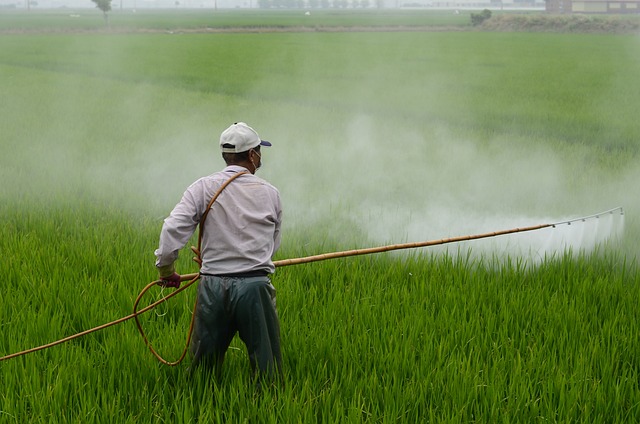
Save the Water Pecticide Spraying

A cropduster spraying pesticide on a field (photo wikipedia)

Pesticides are substances or mixture of substances intended for preventing, destroying, repelling or mitigating any pest.[1] Pesticides are a special kind of products for crop protection. Crop protection products in general protect plants from damaging influences such as weeds, diseases or insects. A pesticide is generally a chemical or biological agent (such as a virus, bacterium, antimicrobial or disinfectant) that through its effect deters, incapacitates, kills or otherwise discourages pests. Target pests can include insects, plant pathogens, weeds, molluscs, birds, mammals, fish, nematodes (roundworms), and microbes that destroy property, cause nuisance, spread disease or are vectors for disease.

Although there are human benefits to the use of pesticides, some also have drawbacks, such as potential toxicity to humans and other animals. According to the Stockholm Convention on Persistent Organic Pollutants, 9 of the 12 most dangerous and persistent organic chemicals are pesticides. Pesticides are categorized into four main substituent chemicals: herbicides; fungicides; insecticides and bactericides.[

Definition

Food and Agriculture Organization (FAO) has defined the term of pesticide as:

any substance or mixture of substances intended for preventing, destroying or controlling any pest, including vectors of human or animal disease, unwanted species of plants or animals causing harm during or otherwise interfering with the production, processing, storage, transport or marketing of food, agricultural commodities, wood and wood products or animal feedstuffs, or substances which may be administered to animals for the control of insects, arachnids or other pests in or on their bodies. The term includes substances intended for use as a plant growth regulator, defoliant, desiccant or agent for thinning fruit or preventing the premature fall of fruit. Also used as substances applied to crops either before or after harvest to protect the commodity from deterioration during storage and transport.

[4]

Type of Pesticide Target Pest Group
Algicides or Algaecides Algae
Avicides Birds
Bactericides Bacteria
Fungicides Fungi and Oomycetes
Insecticides Insects
Miticides or Acaricides Mites
Molluscicides Snails
Nematicides Nematodes
Rodenticides Rodents
Virucides Viruses

Subclasses of pesticides include: herbicides, insecticides, fungicides, rodenticides, pediculicides, and biocides.[3][5]

Pesticides can be classified by target organism, chemical structure, and physical state.[6] Pesticides can also be classed as inorganic, synthetic, or biologicals (biopesticides),[6] although the distinction can sometimes blur. Biopesticides include microbial pesticides and biochemical pesticides.[7] Plant-derived pesticides, or “botanicals”, have been developing quickly. These include the pyrethroids, rotenoids, nicotinoids, and a fourth group that includes strychnine and scilliroside.[8]:15

Many pesticides can be grouped into chemical families. Prominent insecticide families include organochlorines, organophosphates, and carbamates. Organochlorine hydrocarbons (e.g. DDT) could be separated into dichlorodiphenylethanes, cyclodiene compounds, and other related compounds. They operate by disrupting the sodium/potassium balance of the nerve fiber, forcing the nerve to transmit continuously. Their toxicities vary greatly, but they have been phased out because of their persistence and potential to bioaccumulate.[8]:239-240 Organophosphate and carbamates largely replaced organochlorines. Both operate through inhibiting the enzyme acetylcholinesterase, allowing acetylcholine to transfer nerve impulses indefinitely and causing a variety of symptoms such as weakness or paralysis. Organophosphates are quite toxic to vertebrates, and have in some cases been replaced by less toxic carbamates.[8]:136-137 Thiocarbamate and dithiocarbamates are subclasses of carbamates. Prominent families of herbicides include pheoxy and benzoic acid herbicides (e.g. 2,4-D), triazines (e.g. atrazine), ureas (e.g. diuron), and Chloroacetanilides (e.g. alachlor). Phenoxy compounds tend to selectively kill broadleaved weeds rather than grasses. The phenoxy and benzoic acid herbicides function similar to plant growth hormones, and grow cells without normal cell division, crushing the plants nutrient transport system.[8]:300 Triazines interfere with photosynthesis.[8]:335 Many commonly used pesticides are not included in these families, including glyphosate.

Pesticides can be classified based upon their biological mechanism function or application method. Most pesticides work by poisoning pests.[9] A systemic pesticide moves inside a plant following absorption by the plant. With insecticides and most fungicides, this movement is usually upward (through the xylem) and outward. Increased efficiency may be a result. Systemic insecticides, which poison pollen and nectar in the flowers, may kill bees and other needed pollinators.

In 2009, the development of a new class of fungicides called paldoxins was announced. These work by taking advantage of natural defense chemicals released by plants called phytoalexins, which fungi then detoxify using enzymes. The paldoxins inhibit the fungi’s detoxification enzymes. They are believed to be safer and greener.[10]

Save the Water™ is committed to the education of present and future generations to insure the protection and conservation of water. Without clean drinking water, no species plant, animal or human can be saved. We must insure that the water is not contaminated to the point where we can no longer drink it.

  • How to navigate STW ™ postings:
    View monthly posting’s calendar, become a subscriber or obtain RSS feed by going to the bottom index of this page.
  • Explanation of Index:
  • This Months Postings: Calendar on left displays articles and pages posted on a given day.
  • Current and Archived Postings: Click on the month you want to view. Most current article for the month will appear at top of screen.
  • RSS Links : Obtain your RSS feeds.
  • Subscribe: Subscribe to postings by entering your e-mail address and confirming your e-mail.
  • Supporting water research and the education program’s growth of Save the Water™ is vital to our future generation’s health, your funding is needed.

    Hot Topics
    Global Water Crisis
  • Drinking Water Fears After Chemical Spill In North Bay
  • North Bay Ontario Chemical Spill/Residents Evacuated, Driver Dead, In Contamination Rollover On Highway 63
  • Canadian British Columbia Water Crisis Issues
  • Water Crisis Worsens in Hyderabad
  • Jamaican Water Issue: No need to panic! Asbestos cement pipes safe, says NWC
  • Improved but Not Always Safe: Despite Global Efforts, More Than 1 Billion People Likely at Risk for Lack of Clean Water
  • Current: European Report on Development: The Case of Lake Naivasha
    Water Contamination
  • Issue: Navy: Contaminant Found in Drinking Water at Parts of Sigonella
  • Should We Hide Low-Dose Radiation Exposures From The Public?
  • Formaldehyde Pollution Disrupts Water Supplies in Eastern Japan
  • Drinking-water wells were not contaminated by the Kalamazoo River oil spill, state report says [past related articles included]
  • Chemicals In The Water: Problems and Solutions
  • Making Endangered River Safe For Drinking. Potomac Tops List of Endangered Rivers in U.S.
  • EPA to Work with Drinking Water Systems to Monitor Unregulated Contaminants [Thomas Net News]
    Fracking
  • What Is Hydraulic Fracturing Water Usage?
  • What chemicals are used in fracking? Part I
  • Whats Fracking All About? Part 2
  • Study has has raised concerns about the safety of gas drilling in the Marcellus Shale
  • Fracking: Natural Gas Fracking Fizzles in Michigan / Includes an EPA Fracking Directory
    Fluoride
  • Where can you get all the facts about fluoride contamination?
  • Fluoride News In America [Aspen Times] & [KREX News Room]
  • OKOTOKS: Canada Fluoride News: Town Coucillors Want Oral Health Program in Place
    Questions and Answers
  • What do you need to know about chloramine-treated water?
  • What Are The True Facts About Fluoride And Your Health?
  • Chemical Spill: Formaldehyde 101: What Are The Facts?
  • “How Dangerous Is The Chemical Formaldehyde ?”
  • What Are The Facts About (Bisphenol-A) / BPA, Water And Health Risks?
  • What are some of the known water pollutants?
  • What Are Some Facts About Water? Over 100 Facts You May Not Know.
  • Savethewater Water Research and Education

    Comments Off
    Do you need quick support ?

    Welcome

    * required
    Send Message